The Philippines fuel crisis is testing more than online learning

As the Commission on Higher Education gives institutions more flexibility to move classes online, the real test is whether universities have already built the systems and faculty routines that make academic continuity possible.
The current fuel and power crisis in the Philippines has pushed higher education institutions into another period of rapid adjustment. The practical issue for universities is immediate: when learners and faculty can’t reliably get to campus, institutions need to maintain academic operations without adding confusion to an already difficult moment.
Across Philippine higher education, this moment tests more than online learning access. It’s testing whether universities have the learning management system (LMS) routines, faculty preparation, and learner support structures needed to maintain teaching, communication, assessment, and access to course materials when campus attendance becomes difficult.
In April 2026, the Commission on Higher Education (CHED) approved a policy giving higher education institutions full flexibility to shift to 100% online classes in response to the national fuel and power crisis, following a CHED commission meeting on April 6.
CHED has framed the move as a temporary crisis response, giving institutions room to make decisions based on their own information technology infrastructure, faculty capability, institutional capacity, and learner readiness. According to GMA News, the advisory is effective until the end of academic year 2025-2026, including summer classes, with CHED expected to issue a new advisory before academic year 2026-2027.
At De La Salle University (DLSU), the change has already altered day-to-day delivery. Michael V. Manguerra, Director, Academic Support for Instructional Services and Technology , and Assistant Professor, Department of Biomedical, Manufacturing and Robotics Engineering, said the university has temporarily moved from three onsite days per week to one, with classes shifted online.
His experience points to the broader question facing university leaders: whether their digital learning foundations are ready to support teaching, assessment, communication, and learner access when conditions change quickly.
Disruption is part of the operating reality for Philippine higher education
The fuel crisis is urgent, but it isn’t the only disruption affecting campus access in the Philippines. Universities regularly adapt to interruptions caused by transport issues, extreme weather, heat, local emergencies, and other pressures that make face-to-face delivery harder to sustain.
In March 2025, several schools suspended face-to-face classes in response to a transport strike organised by Manibela, with numerous institutions shifting to online learning arrangements during the disruption. In April 2024, record heat forced thousands of public schools to suspend in-person classes, sending more than 3.6 million learners into remote learning arrangements.
These examples come from different parts of the education sector, but they point to a recurring challenge for higher education. Physical attendance can become unsafe, impractical, or inconsistent with little warning, and universities need flexible ways to keep academic activity moving without forcing every course team to rebuild basic processes under pressure.
Treating online learning as a temporary contingency makes each disruption feel like a fresh transition. Building digital learning habits between disruptions helps reduce confusion for faculty and learners when delivery needs to change. Technology-enhanced learning needs to be built into ordinary teaching practice before it’s needed as a crisis response.
LMS readiness changes the experience of disruption
Many institutions adopted or expanded their use of an LMS during the COVID-19 pandemic. Since the return to face-to-face classes, some have continued strengthening LMS usage across daily course delivery, while others have allowed digital learning practices to become less consistent. That difference becomes visible during a crisis.
An LMS delivers the most value in moments like this when learners and faculty already rely on it. If learners are used to checking Canvas for course materials, updates, assessments, and feedback, the shift online doesn’t require each subject to establish a separate process.
Where digital learning practices have faded since the return to face-to-face classes, institutions may find themselves re-establishing basic routines under pressure instead of focusing on the academic work itself. Course teams have to clarify where updates are posted, how assessments are submitted, and where feedback will be shared at the same time they’re adjusting delivery plans.
Readiness depends on more than technical access; universities also need training, course design practices, and consistent LMS use that help faculty and learners know what to do when teaching conditions change.
Canvas supports that work by giving institutions a stable digital learning environment across face-to-face, hybrid, and online delivery. The strongest continuity comes when the platform is already woven into ordinary teaching practice.
Manguerra said Canvas has helped maintain continuity by acting as a central space for teaching and learning. “Canvas has continued to enable us to provide quality education amid disruptions by acting as a 24/7 hub for all teaching-related matters of the university."
Readiness shows up in everyday course delivery
Learner continuity often depends on practical questions: where to find materials, what’s expected each week, whether assessment timelines have changed, where to submit work, and how to contact instructors.
A well-used LMS answers those questions in one place. During a disruption, that consistency is valuable because learners are already managing the practical effects of the crisis outside their coursework. If commuting is harder, household costs are rising, or schedules are changing, the learning environment should reduce uncertainty rather than add to it.
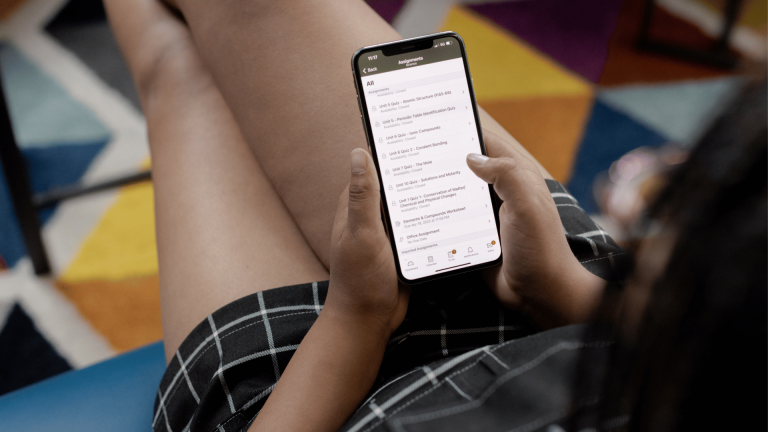
Uneven connectivity adds another practical challenge. When the offline feature is enabled in the Canvas Student mobile app, learners can download selected course content to their devices and keep studying when internet access is limited.
Faculty also need course delivery to remain manageable when plans change. Course materials can be shared in advance, recorded lectures and asynchronous activities can support learners who need more flexibility, and assessment workflows can continue without every course team creating its own process. Announcements and messaging give instructors a central way to communicate changes.
Online learning then becomes more than a temporary substitute for campus-based teaching. Used well, Canvas extends the course experience across delivery modes. A class may meet in person one week and online the next, while learners still return to the same course space and expectations.
CHED’s current policy makes that continuity especially important because institutions have flexibility to make their own decisions about online delivery. CHED has clarified that institutions shifting online during the crisis don’t automatically become permanent Open Distance e-Learning providers, and formal recognition still requires a separate application and screening process. Temporary flexibility places greater importance on whether each university has the systems and faculty capability to maintain academic standards during the shift.
Academic continuity begins before disruption
The current crisis will pass, but the need for academic continuity planning won’t. In the Philippines, the lesson extends beyond fuel prices or a single CHED announcement. Institutions can strengthen the systems that help learning continue when interruptions affect campus access.
Treating the LMS as academic infrastructure requires more than having a platform available. Universities need to support faculty using it consistently during face-to-face terms, help learners build familiarity with digital course spaces, and make online learning practices part of daily delivery.
At Manguerra’s institution, that preparation was already in place. “The university had already established learning continuity protocols, with all courses prepared to shift online as needed, even at short notice,” he said.
Universities that have already embedded Canvas into course delivery can manage the current shift from a stronger starting point. Institutions that invested in an LMS during COVID-19 but haven’t fully sustained its use may find this moment a reminder that digital learning readiness needs ongoing attention.
CHED’s decision gives higher education institutions flexibility during a difficult period. The institutions best placed to use that flexibility are the ones that have already built the faculty routines, course design practices, and learner support systems that keep academic continuity steady before disruption makes them urgent.